
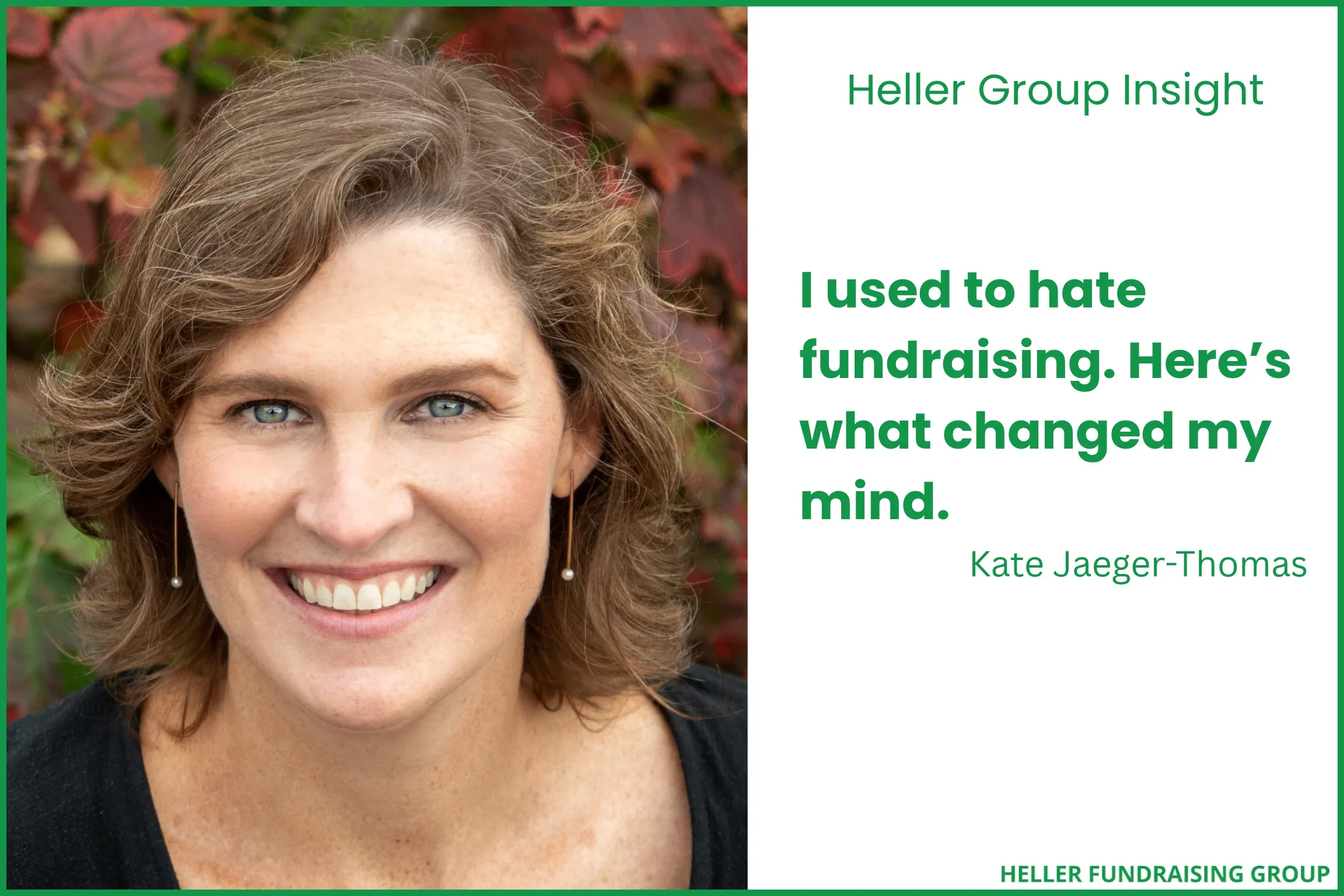
I used to hate fundraising. Here’s what changed my mind.
I have a confession to make.
For the first 10 years I worked as a fundraiser, I hated it.
Hate might be too strong a word, but it made me deeply uncomfortable and I felt a lot of anxiety and dread.
Fundraising wasn’t what I set out to do. I was running a theater company and in order to do that, I needed sustainable funding, and it had to come from donors. Asking for money was actually what scared me most about the job.
I carried that energy well into my career, even when I shifted to a full-time fundraising role.
I always felt like I was approaching people with my hat in hand, hoping to justify the important work I knew we were doing. “Yes,” I would say, “we are an incredible organization with a worthy cause and we’re hoping you might find it in your hearts to support us.”
Our founder, Peter Heller, often talks about nonprofit self-esteem. He points out that many organizations struggle under the weight of feeling less than. It always seems like there’s another nonprofit that has a more compelling mission, that has made a more visible impact, or that’s in a stronger financial position. How could we possibly compete?
The truth is, your work matters. And there are people out there who will show their belief in you if you give them the chance.
It wasn’t until I started making significant asks that I began to realize how the most effective—and honestly, fun—part of fundraising is building partnerships.
When I focused on the relationships, I saw how an inspiring leader could weave a compelling story about their vision for the future. I watched donors light up when they realized the potential impact on a community or a cause they cared about. I could spot the moment when the lightbulb went off, when they understood they had a meaningful role to play in making that vision possible.
At its best, fundraising is about far more than making an ask. It’s an invitation to be part of something bigger than any one of us. It’s about helping a donor find their place in an issue they care about, and shaping the world in ways that you can be proud of.
Still, knowing this and believing it are two different things.
Even the most experienced fundraisers can carry hangups about the work. Volunteers and board members are often mired in them.
You can know, cognitively, that fundraising is all about partnerships. But there’s a part of you that still feels like you’re asking donors to do you a favor.
That sense will continue to show up in your solicitations—and in your own experience of asking—unless you shift your thinking and truly believe in the value of partnership-centered fundraising.
Once you do that, your fundraising starts to become transformative.
It’s a mindset shift that takes time and attention, and we love to coach our clients through the journey.
If you’re struggling to approach your fundraising with confidence and a true belief in the power of relationships, we can guide you to think differently. Schedule a free, 30-minute strategy session and let’s talk.